

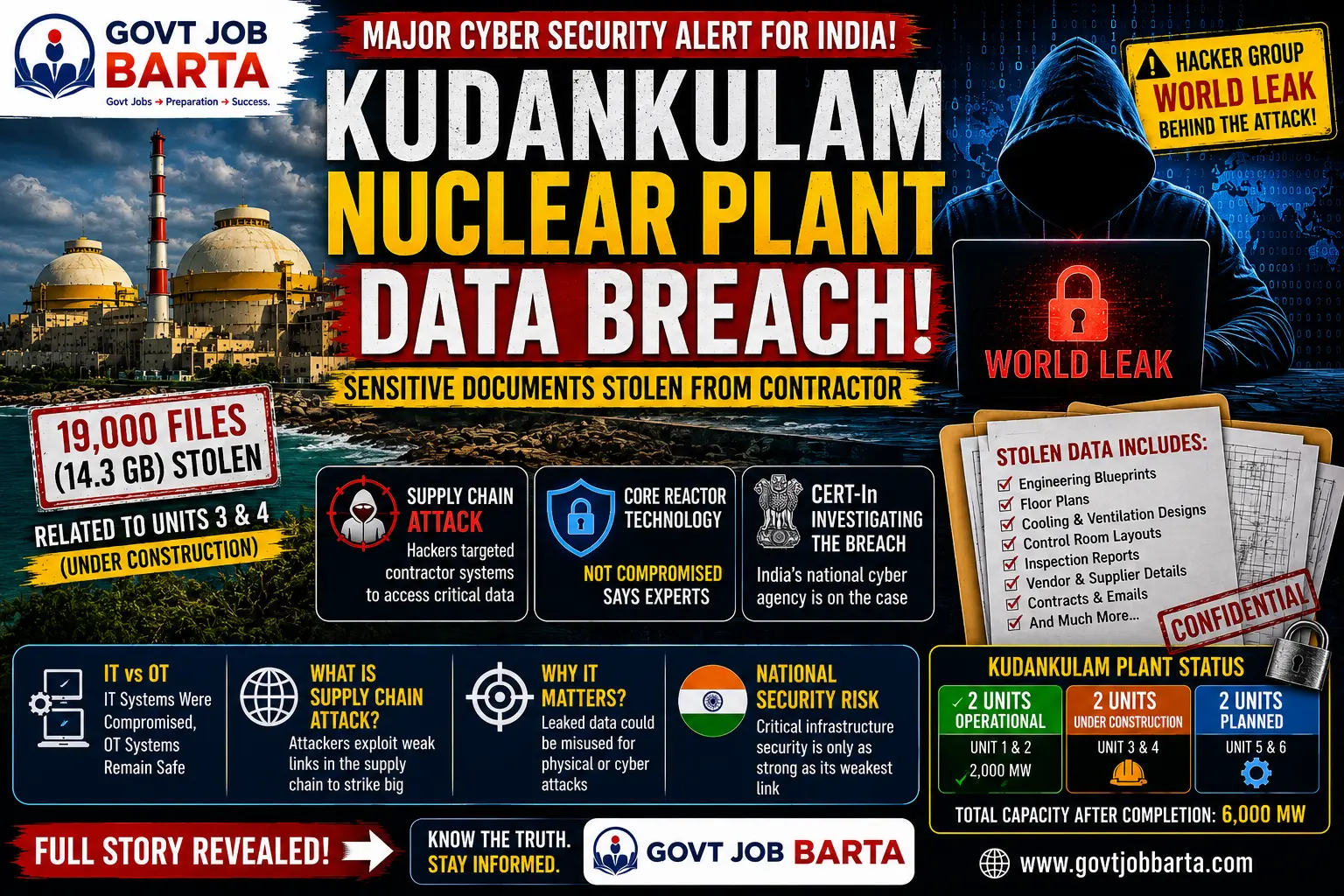
Kudankulam Nuclear Plant Data Breach has become one of India’s biggest cybersecurity stories after hackers reportedly stole thousands of sensitive engineering and infrastructure documents linked to the country’s largest nuclear power project.
The breach did not compromise the reactor’s operational systems, but cybersecurity experts warn that the leaked information could still pose serious national security risks if exploited by hostile actors.
So what exactly happened?
Was India’s nuclear reactor hacked?
What data was stolen?
Who is behind the attack?
Could India’s power infrastructure be at risk?
Here’s everything you need to know.
What Happened at Kudankulam Nuclear Power Plant?
The incident involves a cyberattack on Reliance Infrastructure, one of the contractors associated with the construction work at the Kudankulam Nuclear Power Plant.
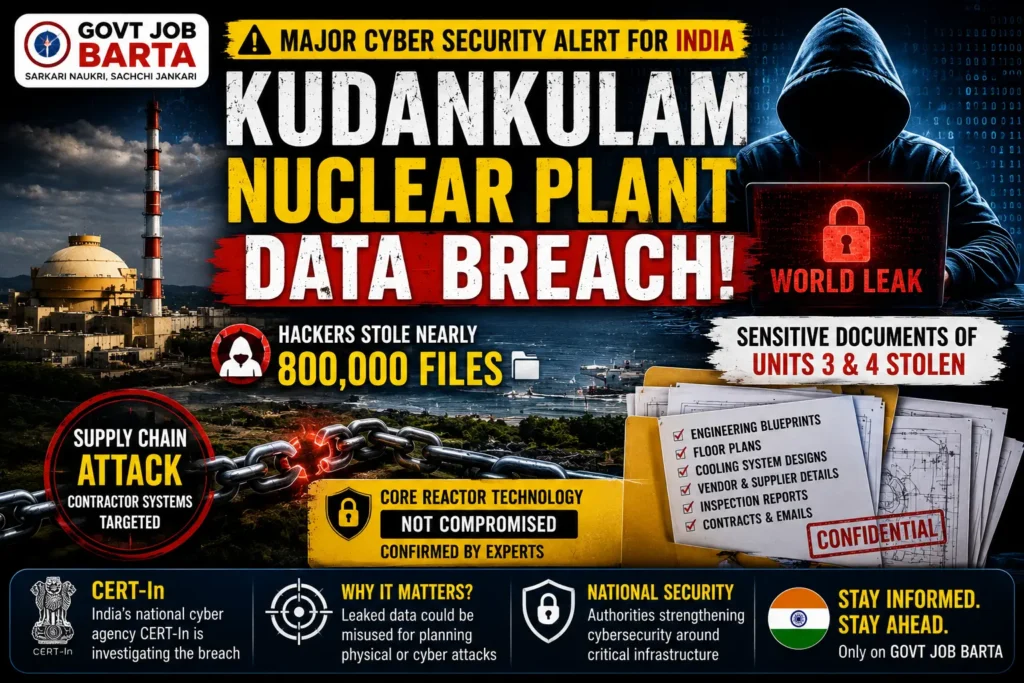
According to reports, the ransomware group World Leak infiltrated Reliance Infrastructure’s systems and allegedly exfiltrated nearly 800,000 files.
Among them were around 19,000 files (approximately 14.3 GB) specifically linked to Kudankulam Units 3 and 4, which are currently under construction.
India’s national cyber agency CERT-In is investigating the incident.
1. Was the Nuclear Reactor Hacked?
This is the biggest question.
The answer is No—not based on the available information.
The leaked documents primarily belonged to Information Technology (IT) systems and engineering records.
The highly sensitive Operational Technology (OT) responsible for controlling the reactor remained isolated and secure.
Critical components such as:
- Reactor control systems
- Nuclear fuel control mechanisms
- Emergency shutdown systems
- Reactor coolant controls
were not reported to have been compromised.
2. What Data Was Stolen?
The attackers reportedly obtained:
- Engineering blueprints
- Construction drawings
- Cooling system layouts
- Ventilation system designs
- Control room floor plans
- Inspection reports
- Vendor details
- Supplier information
- Contracts
- Insurance documents
- Internal emails
- Meeting minutes
Although this is different from stealing reactor controls, such information can still reveal important details about a facility’s infrastructure.
3. Who Is World Leak?
World Leak is a ransomware and cyber-extortion group known for targeting governments and large corporations.
Its typical method involves:
- Breaking into corporate networks
- Stealing confidential data
- Encrypting files
- Demanding ransom
- Threatening to publish stolen data on the dark web if payment is refused
Large organizations are often targeted because they possess valuable information and are more likely to face pressure to recover sensitive data.
4. Why Didn’t Hackers Attack the Nuclear Plant Directly?
This incident is an example of a Supply Chain Attack.
Instead of attacking a heavily protected nuclear facility, cybercriminals allegedly targeted one of its contractors.
This approach allows attackers to obtain sensitive project information through a comparatively weaker point in the ecosystem.
Supply chain attacks have become one of the fastest-growing threats worldwide because they can expose multiple organizations through a single breach.
5. Why Is the Leaked Data Still Dangerous?
Even though reactor operations were not affected, infrastructure data can still be valuable to hostile actors.
Detailed engineering drawings may help adversaries understand:
- Building layouts
- Equipment locations
- Ventilation systems
- Construction planning
- Vendor networks
Security experts often warn that such information could be misused in planning future cyber or physical attacks.
6. IT vs OT: What’s the Difference?
Understanding this distinction is essential.
Information Technology (IT)
IT systems manage:
- Emails
- Procurement
- Payroll
- Documents
- Administrative records
Operational Technology (OT)
OT systems control physical operations such as:
- Reactor controls
- Turbine operations
- Cooling systems
- Safety mechanisms
According to the available information, the breach affected IT-related systems, not the OT systems that operate the nuclear reactor.
7. Has Kudankulam Faced Cyber Threats Before?
Yes.
In 2019, the Kudankulam Nuclear Power Plant experienced another cybersecurity incident involving DTrack malware.
That attack reportedly affected IT systems but did not compromise the plant’s operational reactor controls.
The recent breach has therefore renewed discussions about cybersecurity around critical infrastructure.
8. How Is India Responding?
India’s national cyber emergency response agency CERT-In is investigating the incident.
Authorities are expected to:
- Assess the scope of the breach
- Identify affected systems
- Strengthen cybersecurity measures
- Coordinate with relevant organizations
- Reduce potential risks to critical infrastructure

9. Why This Matters for National Security
Modern critical infrastructure depends on a vast network of contractors, suppliers and technology partners.
This incident demonstrates that protecting only the primary organization is no longer sufficient.
Every contractor in the supply chain must maintain strong cybersecurity practices because attackers often exploit the weakest link.
Russia’s Role in the Kudankulam Project
The Kudankulam Nuclear Power Plant is a joint project between:
- Rosatom (Russia)
- Nuclear Power Corporation of India Limited (NPCIL)
Russia provides:
- VVER reactor technology
- Nuclear fuel
- Technical support
India is responsible for:
- Construction
- Operations
- Grid integration
- Site management
Current Status of Kudankulam Nuclear Plant
The plant currently has:
- Unit 1 (Operational)
- Unit 2 (Operational)
Combined generation capacity:
2,000 MW
Currently under construction:
- Unit 3
- Unit 4
Future expansion:
- Unit 5
- Unit 6
When completed, total capacity is expected to reach:
6,000 MW
making Kudankulam one of Asia’s largest nuclear power facilities.
Key Takeaways
- A contractor associated with the Kudankulam Nuclear Power Plant experienced a major cybersecurity breach.
- The reported leak included engineering and administrative documents related to Units 3 and 4.
- Available information indicates the reactor’s operational technology was not compromised.
- The incident is considered an example of a supply chain attack.
- CERT-In is investigating the breach and assessing potential national security implications.
FAQs
What is the Kudankulam Nuclear Plant Data Breach?
It refers to a cybersecurity incident in which sensitive engineering and administrative files linked to the Kudankulam Nuclear Power Plant project were reportedly stolen from a contractor’s systems.
Was the Kudankulam nuclear reactor hacked?
Based on currently available information, there is no indication that the reactor’s operational technology or core reactor controls were compromised.
Who carried out the attack?
The ransomware group World Leak has been reported as the group behind the breach.
Why is this breach important?
Although operational reactor systems were not affected, infrastructure and engineering documents could still have security implications if misused.
- Free Daily Current Affairs 13th July PDF
- Free Daily Current Affairs 14th July PDF
- Free Daily Current Affairs 15th July PDF
- Free Daily Current Affairs 16th July PDF